Olympos and Çıralı Guide: Ancient City, Yanartaş and Caretta Beach
A well-sourced travel and conservation guide to the Ancient City of Olympos stretching down to the sea, the night flames of Yanartaş, and the nesting beach of loggerhead turtles in Çıralı.
See us first in your Antalya searches
Reach our listings and latest guides at the top when you search Google for places, restaurants and events.
Getting to Know Olympos and Çıralı
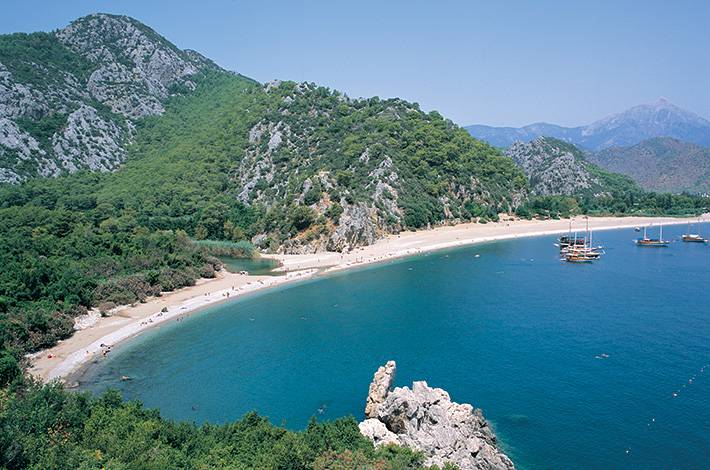
Olympos and Çıralı are two ends of the very same shoreline where Beydağları meets the sea. The official address of the Ancient City of Olympos falls under Yazır Mahallesi in Kumluca; Çıralı, on the other end of the beach, is a neighborhood of Ulupınar in Kemer. Therefore, the area can be reached from both Kumluca and Kemer. The ancient city, the perpetual flames of Yanartaş, and the long nesting beach of sea turtles seamlessly blend into a single trip. For Kemer center, Phaselis, and Tahtalı, you can consult our Kemer Guide; this guide takes a closer look at Olympos and Çıralı.
Ancient City of Olympos
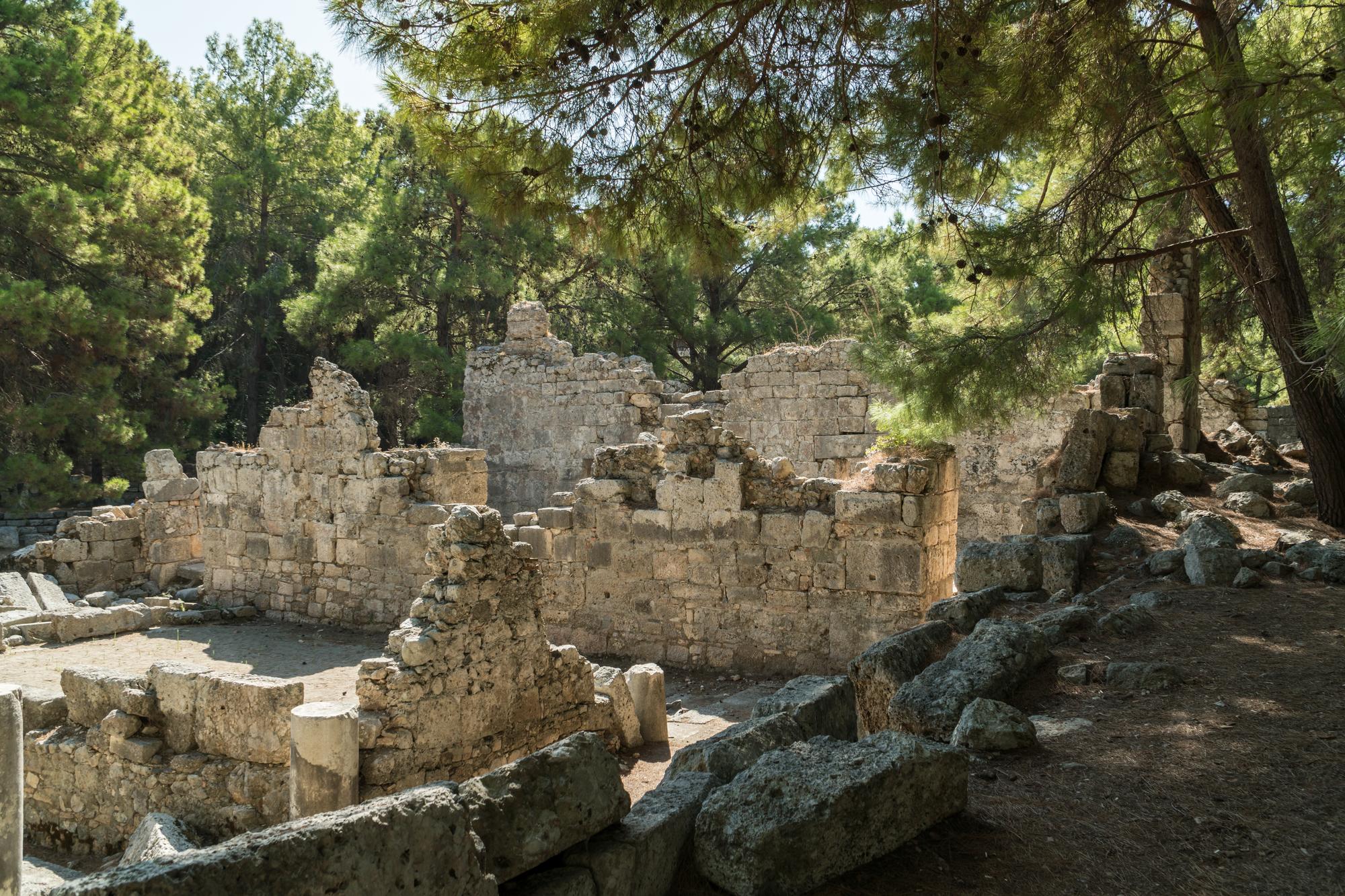
Official records state that the city was established in the Hellenistic period; its founder and exact date of establishment remain unknown. Olympos was an influential member of the Lycian League. Its sheltered natural harbor was known as a stronghold for pirates for a long time, an era that ended in 78 BC when Roman commander Servilius Isauricus seized the city.
The ruins are scattered across both banks of the river running through the valley, with much of the architecture enfolded in dense vegetation:
- Acropolis: Perched on a hill overlooking both the valley and the shore.
- Canal and bridge: A waterway flanked by masonry walls transforming the riverbed into an urban canal.
- Theater, ramparts, and Roman baths: Traces reflecting civic life, culture, and ancient city defenses.
- Byzantine basilica and medieval fortress: Structures dating from the subsequent phases of the city's history.
Wandering through the archaeological site and suddenly emerging onto the sandy beach sets Olympos apart from other ancient cities across the region. Admission requires a fee, and Museum Pass (MüzeKart) is valid.
Yanartaş (Chimera)
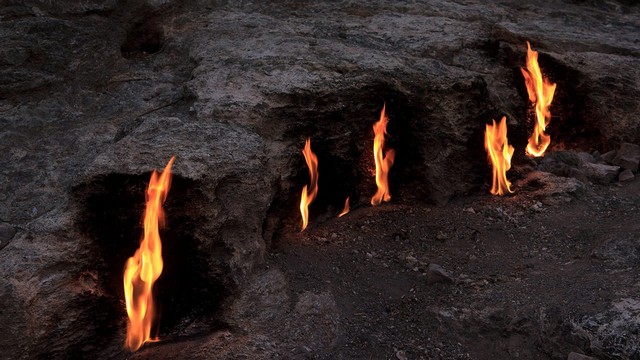
Yanartaş is nestled on a mountainside just near Çıralı, a few kilometers southwest of Olympos. Natural gas perpetually seeping through rock fissures ignites upon contact with the air. Celebrated as Chimaera in classical ancient accounts, this spot is woven into Greek mythology; in antiquity, the blazing hillside served as an important cult center dedicated to Hephaestus, the god of fire and blacksmithing.
The flames can only be reached on foot. A moderately steep uphill path of roughly 1,400 meters ascends from the Çıralı side. The site lies within Beydağları Coastal National Park and forms part of the Lycian Way route. Since the flames appear far more spectacular after dark, visitors typically set out in the late afternoon; be sure to carry a flashlight for the trek back down.
Çıralı and Loggerhead Turtles
The beach in Çıralı is one of the most vital sea turtle (Caretta caretta) nesting sites in Türkiye. Protection initiatives are overseen under a formal agreement between the 6th Regional Directorate of Nature Conservation and National Parks and the Ulupınar Environmental Protection, Development, and Management Cooperative founded in 2000; these organized efforts stem from a community-driven initiative that began in 1994. Local villagers actively defending the shoreline against development have also been documented by international conservation organizations.
Every nesting season, volunteers monitor the number of nests along the beach, and recent seasons have made headlines for setting 30-year nesting records.
Two-Day Sample Itinerary
- Day one morning: Walk along the stream in the ancient city of Olympos and head out to the beach
- Day one late afternoon: Hike up the Yanartaş trail from Çıralı
- Day two: Swimming at Çıralı beach and conservation briefings during daytime hours
- On the way back: The ancient city of Phaselis in the direction of Kemer (details in the Kemer Guide)
Kumluca Highlights in Our Guide
Frequently Asked Questions
The archaeological site officially belongs to Yazır Mahallesi in Kumluca. Çıralı, at the other end of the beach, is affiliated with Kemer.
Entering the beach at night is prohibited throughout the nesting season. The specific hours are announced by the authorities every season.
Setting off in the late afternoon is common, as the flames are much more visible in the dark. The trail is uphill; appropriate shoes and a torch (flashlight) are essential.
Yes, according to the Ministry's official website, the Museum Pass (Müze Kart) is valid. Current fees and opening hours should be confirmed with official sources before visiting.
Sources
- Lexpera: Deniz Kaplumbağalarının Korunması Genelgesi 2009/10
- Habertürk: Çıralı'da sezonun ilk yuvaları tespit edildi
- Habertürk: Çıralı'da 30 yılın deniz kaplumbağası yuva rekoru kırıldı
- Ekonomim: Kaplumbağa kumsallarında gece giriş yasağı
- Turtle Foundation: Villagers stop construction on nesting beach in Turkey
Information verified as of 28 October 2026. Times, fares and routes may change; check official sources before you travel.
More guides
 Event guide
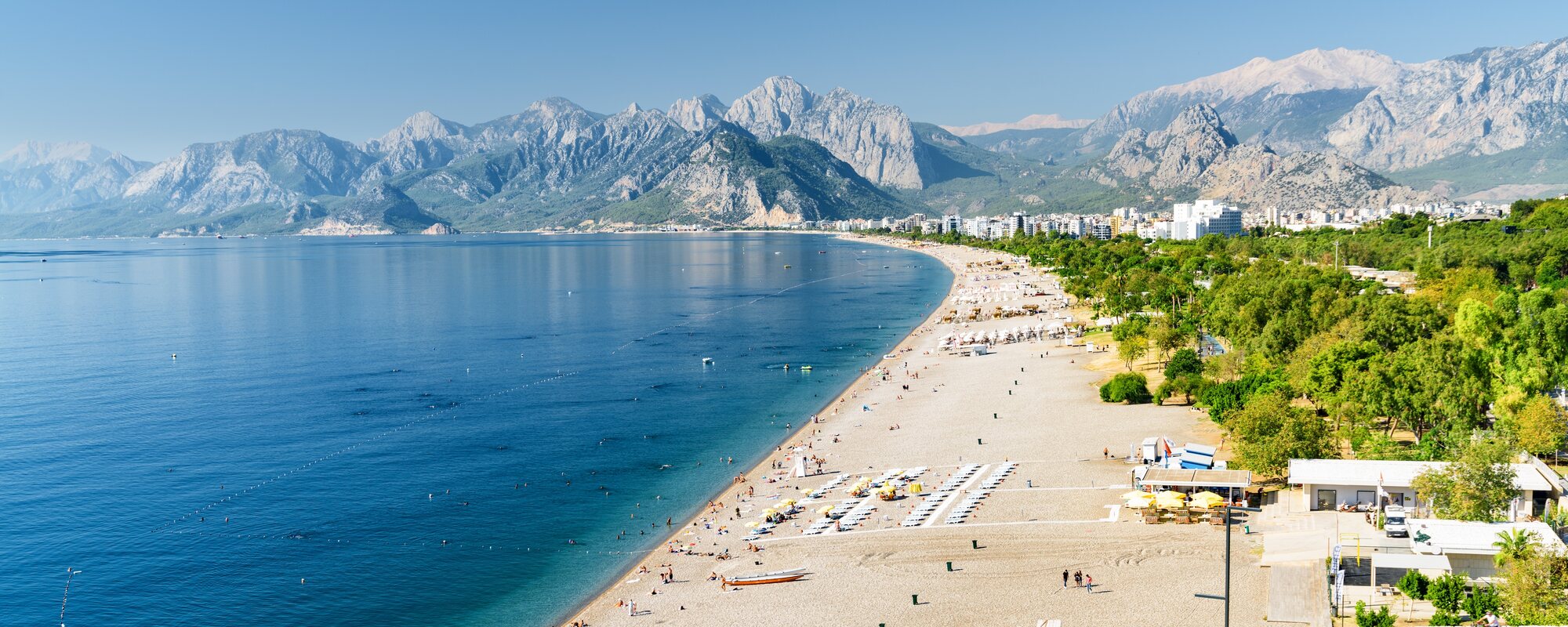
Antalya Culture Route Festival 2026 - Festival Guide
When is Antalya Culture Route Festival 2026, and who will perform at the concerts? We have brought together the free Konyaaltı Beach Park concerts, opera and ballet programme, exhibitions, children's activities, and gastronomy routes between 31 October and 8 November.
 Itinerary
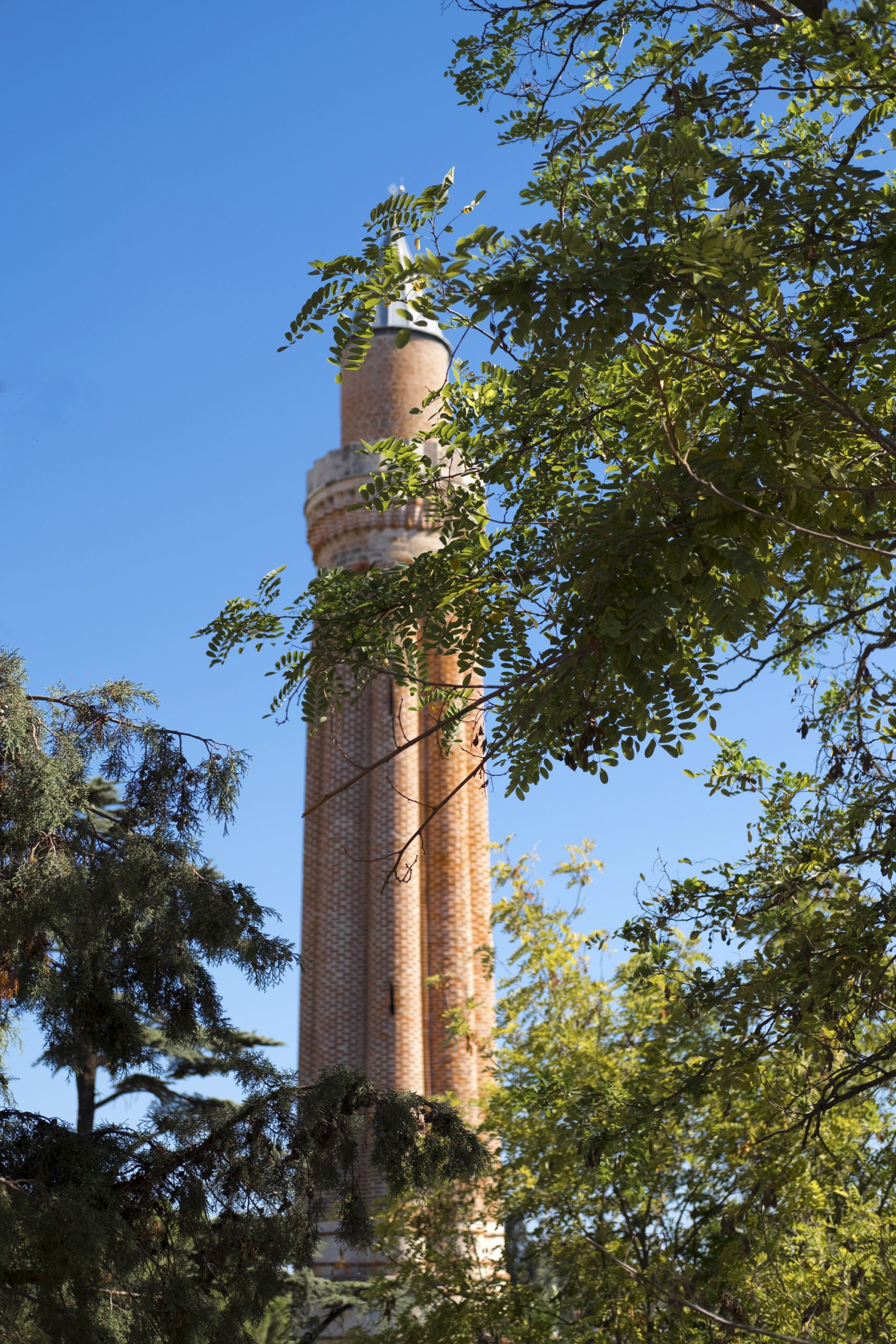
Antalya's Seljuk Heritage: Mosques, Caravanserais, Madrasas
A well-referenced guide to the Seljuk and Beylik-era monuments across Antalya, from Yivli Minare to Alanya Castle, Evdir Han, Kırkgöz Han, and Alarahan Caravanserai to Korkuteli.
 Itinerary
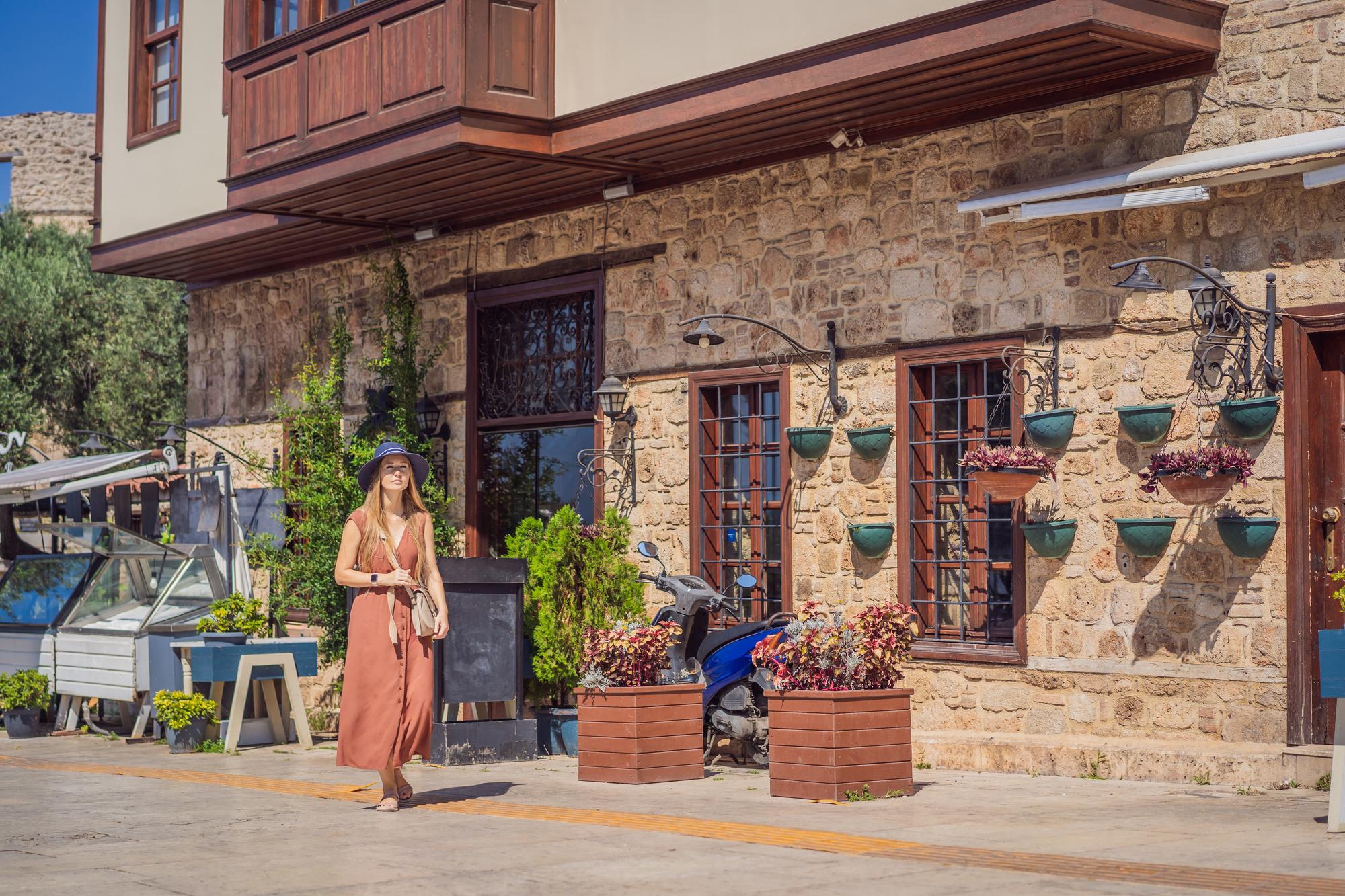
Antalya on a Rainy Day: Indoor Venues and Museums
A sourced guide to museums, the aquarium, museum and science venues in Dokuma Park, caves, and covered bazaars to visit in Antalya on a rainy or chilly day.